Management Pods
Restructuring our Shadstone team org chart for the AI era — inspired by Meta’s pod model
The Tweet That Started It All
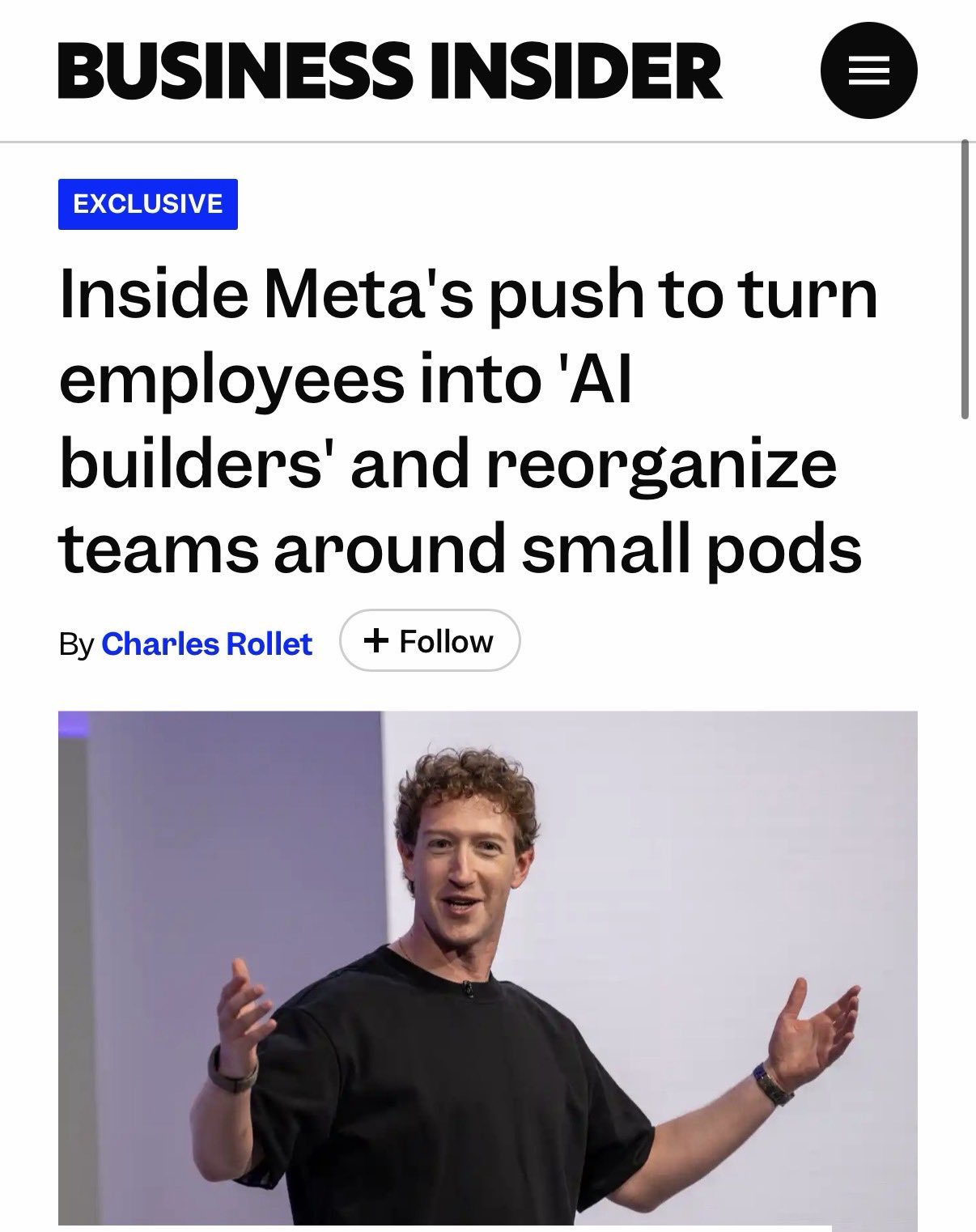
On March 28, 2026, Ran Aroussi (@aroussi) posted “Called it.” alongside two revealing screenshots from Business Insider. The article detailed how Meta is radically reshaping its engineering organization: turning every employee into an “AI builder” and organizing work around small, high-leverage pods.
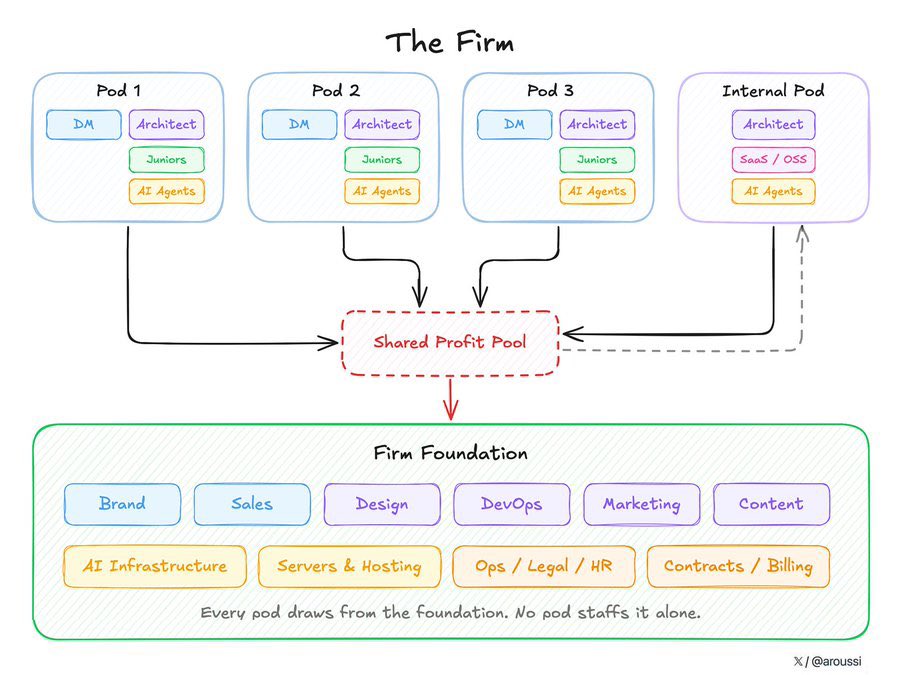
The second image was even more powerful — a hand-drawn org-chart diagram showing the new structure in action.
Why Shadstone Needs This Now
Traditional hierarchical org charts were built for the pre-AI world. One senior + juniors + coordination overhead. With agents and tools like Cursor, Claude, and custom AI infrastructure, a single skilled human can now deliver what used to take an entire department.
The leverage is no longer linear — it’s exponential. Meta saw this and acted. We should too.
The Pod Model Explained
Each Pod is a self-contained, high-velocity unit:
1. Delivery Manager (DM)
Owns outcomes, client communication, and sprint execution. Acts as the human face and accountability owner.
2. Architect
Designs systems, makes technical decisions, and reviews all AI-generated code. The technical brain of the pod.
3. AI Agents + Juniors
Claude/Cursor agents handle 80% of the execution. Junior humans (or more agents) execute under architect guidance.
All pods feed into a Shared Profit Pool and a central Firm Foundation layer (Brand, Sales, Design, DevOps, AI Infrastructure). This keeps specialized services efficient while pods stay autonomous and fast.
How We Can Adapt This at Shadstone
Here are three concrete ways we can implement pods immediately:
- Start with 3–4 pilot pods — one per major client vertical or product line. Assign a DM + Architect pair and give them full agent access.
- Reallocate headcount — move from large functional teams to pod-based squads. Reduce middle management layers.
- Build the Firm Foundation — central AI infrastructure team, shared design system, sales pod, and profit-pool incentives that reward pod velocity.
Expected Impact
10x Velocity
One pod can ship what a 12-person team ships today.
Lower Coordination Cost
Agents handle grunt work; humans focus on judgment and relationships.
Clear Accountability
Every pod has one DM who owns outcomes — no more “diffused responsibility.”
Better Talent Attraction
Top AI-native talent wants to work in pods, not legacy hierarchies.
Next Steps for the Management Team
Let’s schedule a 90-minute working session to:
- Map our current org chart against the pod model
- Identify first three pods to launch in Q2
- Define the shared Firm Foundation services we need to stand up
- Set pod-level KPIs and profit-pool rules
This isn’t theory — Meta is already doing it. The question is whether Shadstone will lead or follow.
Ready to build the AI-native organization of the future?
Let’s turn these pods into reality.
Comments
Approved comments appear below. Log in once with GFAVIP — it applies across the whole site. GFAVIP login
View comments archive